
Capabilities
Steel fabrication capabilities
Capacities, materials and tolerances
What we can cut, fold, roll, weld and coat, what we hold in stock, and the tolerances you can design to. If your part sits outside these figures, send it anyway. Our capacity is wider than this page, and we will tell you whether it is possible.
Processes & capacities
01
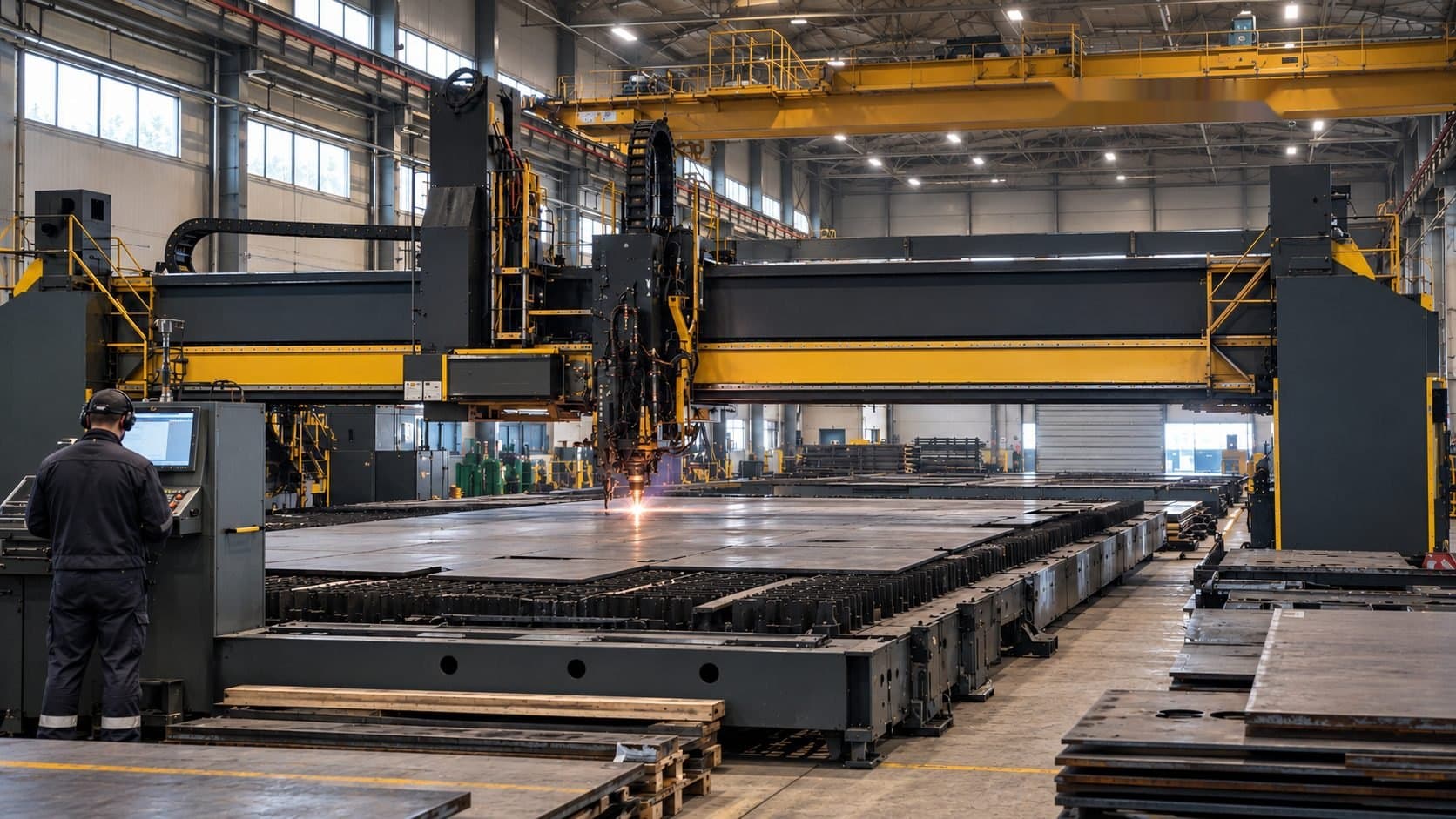
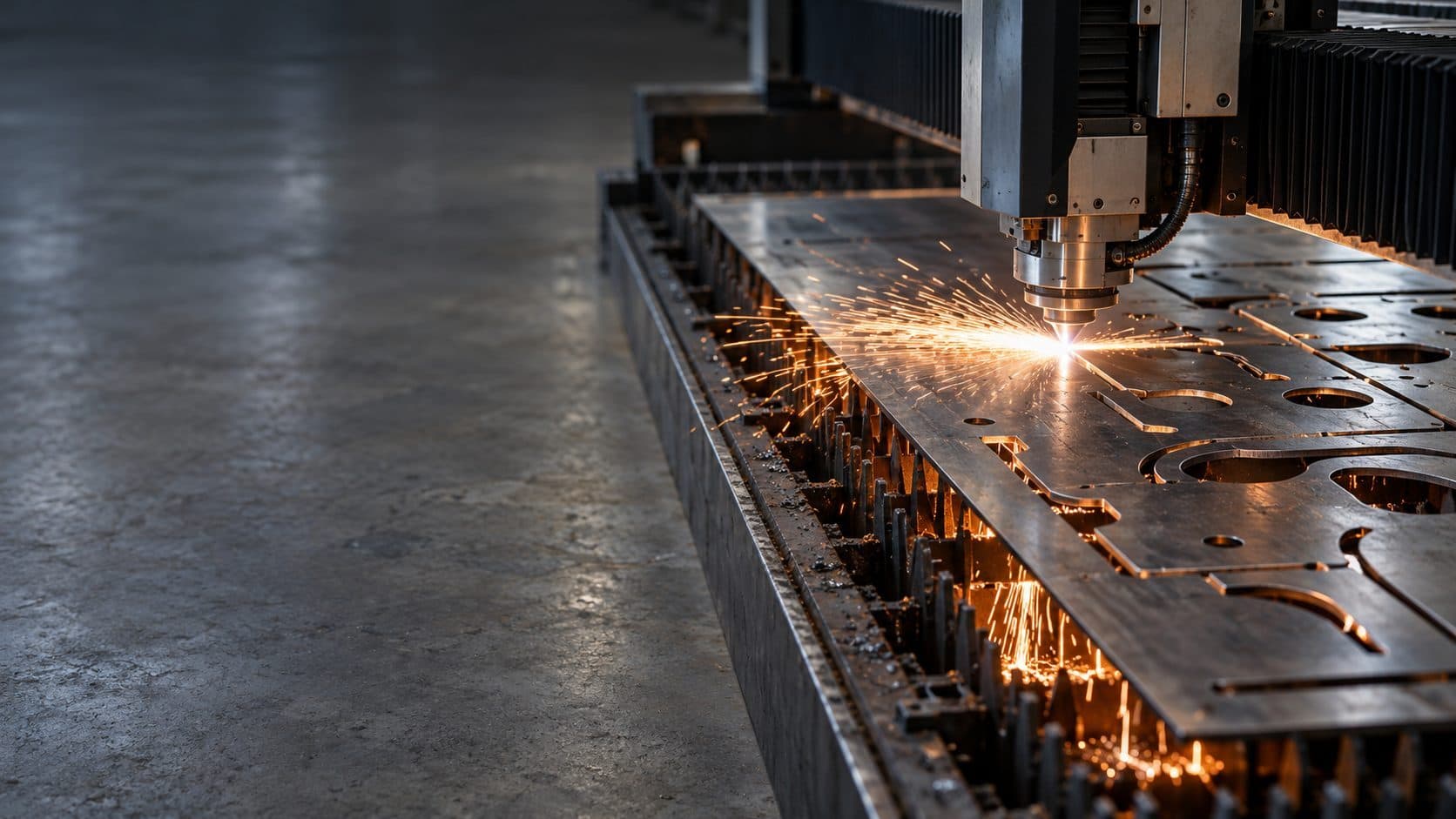
Laser cutting
Flat-sheet and tube laser cutting, running around 50 tonnes a day. Parts are nested across jobs, which keeps the material cost down.
- Mild steel
- 0.5 – 25 mm
- Stainless steel
- 0.5 – 20 mm
- Aluminium
- 1 – 16 mm
- Max sheet
- 6000 × 1500 mm; longer from coil on request
- Tube laser
- Round Ø 20 – 220 mm, square up to 200 × 200 mm
- Cut tolerance
- EN ISO 9013 range 2 typical
02
Press-brake folding
CNC folding for brackets, trays, panels and box sections, with tooling for deep and returned folds.
- Max bend length
- 4000 mm
- Max force
- 220 t
- Mild steel thickness
- Up to 12 mm at full length
- Angle tolerance
- ± 0.5° typical
- Min flange
- Roughly 4× material thickness
03
Rolling
Plate and section rolling for curved stringers, continuous handrails, hoops and planter bodies.
- Plate rolling
- Up to 12 mm × 2000 mm wide
- Section rolling
- SHS, RHS, flat bar, angle, tube
- Min radius
- Depends on the section; ask with your drawing
- Typical use
- Curved balustrade, spiral stair stringers, arches
04
Welding & assembly
MIG, TIG and spot welding at our dedicated fabrication plants. Experienced, qualified welders, with weld procedures on file.
- Processes
- MIG (135), TIG (141), spot
- Materials
- Mild steel, stainless, aluminium
- Assembly tolerance
- EN ISO 13920 class B typical
- Max assembly
- Approx. 12 m; longer supplied in bolted sections
05
Machining
Drilling, tapping, countersinking, milling and turning for connection details, hardware fixings and machined faces.
- Drilling
- Up to Ø 50 mm in plate
- Threads
- M6 – M36
- General tolerance
- EN ISO 2768-m
- Typical use
- Base plates, cleats, handrail brackets, hinge details
06
Surface preparation
Every piece is blasted and chemically pre-treated before it is coated, as standard and included in the price. A clean, keyed surface is what makes the coating last.
- Shot blasting
- To Sa 2½ (EN ISO 8501-1)
- Pre-treatment
- Degrease, phosphate, rinse
- Edge preparation
- Deburred and radiused where coating requires it
Materials
Standard stock across our production chain. Anything outside this is bought in, which adds a few days.
| Material | Grades | Forms held | Notes |
|---|---|---|---|
| Structural steel | S235JR, S275JR, S355J2 | UB, UC, PFC, angle, flat, plate, SHS, RHS, CHS | Structural grades traceable back to the mill. |
| Sheet & plate | DC01, S235, S355 | Sheet 0.5 – 25 mm, plate to 40 mm cut to size | Laser-cut profiles nested across jobs for material efficiency. |
| Stainless steel | 1.4301 (304), 1.4404 (316L) | Sheet, bar, tube, fittings | 316L specified for coastal and swimming-pool environments. |
| Aluminium | EN AW-5754, EN AW-6082 | Sheet, extrusion, plate | Welded and anodised or powder coated. |
| Weathering steel | S355J0WP (Corten-type) | Sheet, plate | For planters, screens and architectural features left to patinate. |
Finishes
For anything going outdoors in the UK we recommend duplex: galvanising protects the steel for decades and powder coating keeps the colour, so together they give a finish that lasts.
Hot-dip galvanising
EN ISO 1461. Typical coating 55–85 µm depending on section thickness.
Typical use · External steelwork, fire escapes, gate frames, anything structural outdoors.
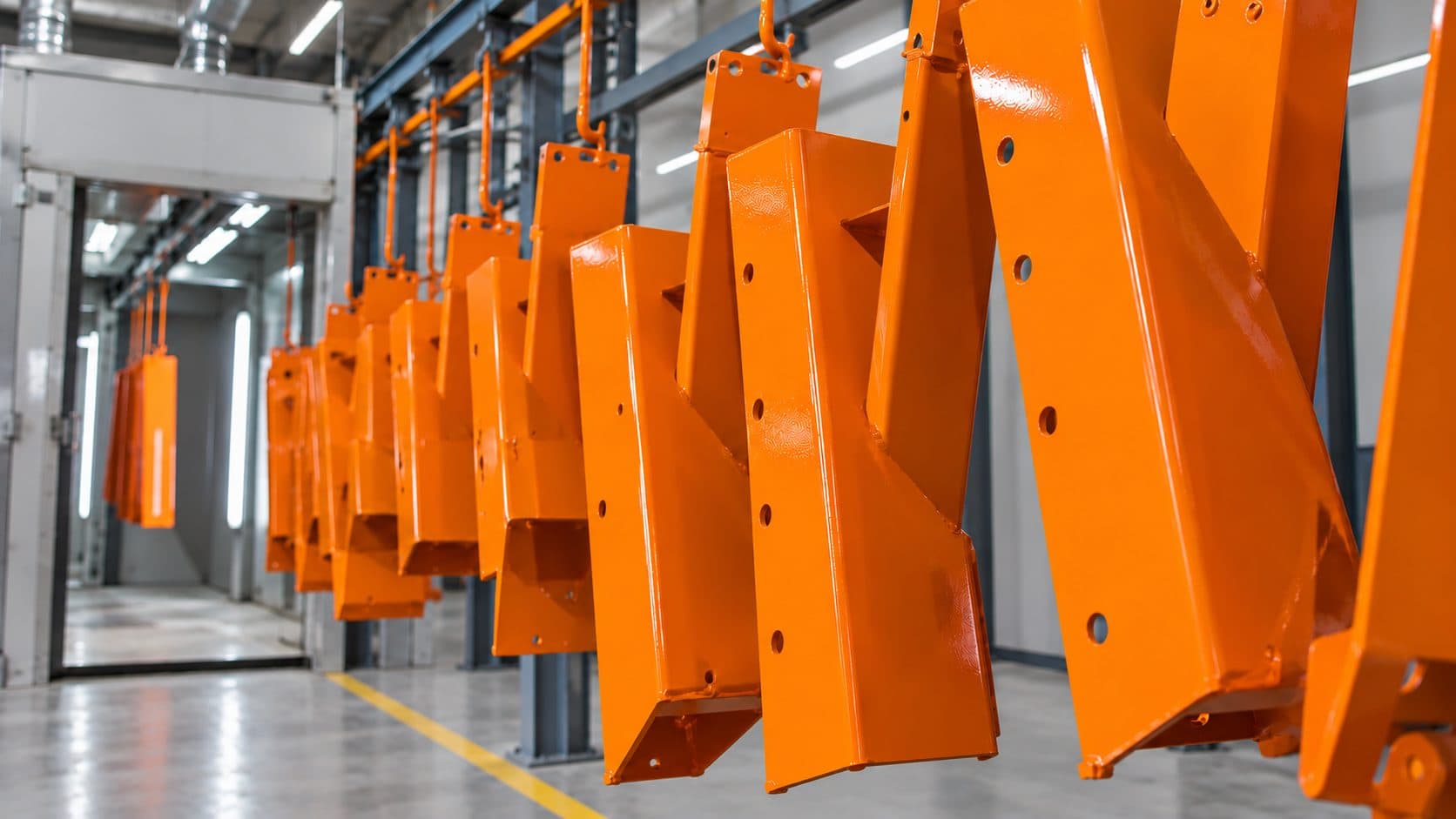
Polyester powder coating
Any RAL colour, 60–80 µm. Architectural-grade polyester available.
Typical use · Balustrade, gates, railings, visible internal steel.
Duplex (galv + powder)
Galvanised, then powder coated. Service life far beyond either alone.
Typical use · Our default recommendation for anything permanently outdoors in the UK.
Wet paint systems
Primer plus topcoat to a specified system, including two-pack.
Typical use · Where a specification names a wet system, or for very large assemblies.
Primed only
Shop primer, for steelwork that will be finished on site or encased.
Typical use · Structural beams, hidden frames.
Self-colour
Mill finish, deburred, lightly oiled to protect the surface in transit.
Typical use · Components a customer will finish themselves.
How is the work checked?
Capability is only half of it. Inspection stages and the packing standard are set out in full on the quality page.
Quality →Made this way
This is how we make railings & balustrades, gates, staircases and fencing & screens for private and trade buyers, and how metal fabrication, laser cutting service, sheet metal fabrication and bespoke metalwork work for workshops, fabricators and contractors.
Have an unusual job? Ask.
Send us the unusual job: the curved stringer, the 6 m gate, the one-off part. Somewhere along our production chain there is a machine for it, and we will tell you how we would make it.